
Listen & Subscribe

Listen & Subscribe


Listen & Subscribe
Subscribe, Review, Listen:


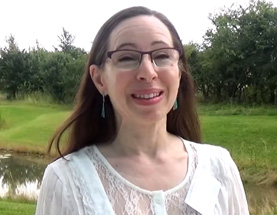
What can the behavior of primates teach us about how humans think, learn, and navigate the world? In this episode, Dr. Francine Dolins, Assistant Professor of Psychology at the University of Michigan–Dearborn, joins us to explore how studying animal cognition reveals powerful insights into the origins of human intelligence, decision-making, and social behavior.
With a Ph.D. in Cognitive Psychology and Behavioral Primatology from the University of Stirling and field experience studying lemurs, tamarins, and other primates across Madagascar, Costa Rica, and Peru, Dr. Dolins brings a unique perspective that blends ecology, psychology, and evolutionary science. Her work examines how primates understand space, form mental maps, and make complex choices in both natural environments and controlled research settings.
In this episode, we explore:
Dr. Dolins collaborates with researchers around the world, combining fieldwork, technology, and behavioral science to support conservation, animal welfare, and education. If you’re curious about how studying our closest relatives can help us better understand the human mind, this conversation offers fascinating insights into the science behind cognition and behavior.
Learn more about Dr. Dolins and her work here.
Episode also available on Apple Podcasts: https://apple.co/38oMlMr
🛍️ Recommended Products & Reads from This Episode:
Note: These are affiliate links. If you make a purchase through them, we may earn a small commission at no extra cost to you. It helps support the podcast. Thank you!
Podcast: Play in new window | Download | Embed
Subscribe, Review, Listen:


Follow Us


Copyright © 2026 The Good Question Podcast. All rights reserved.